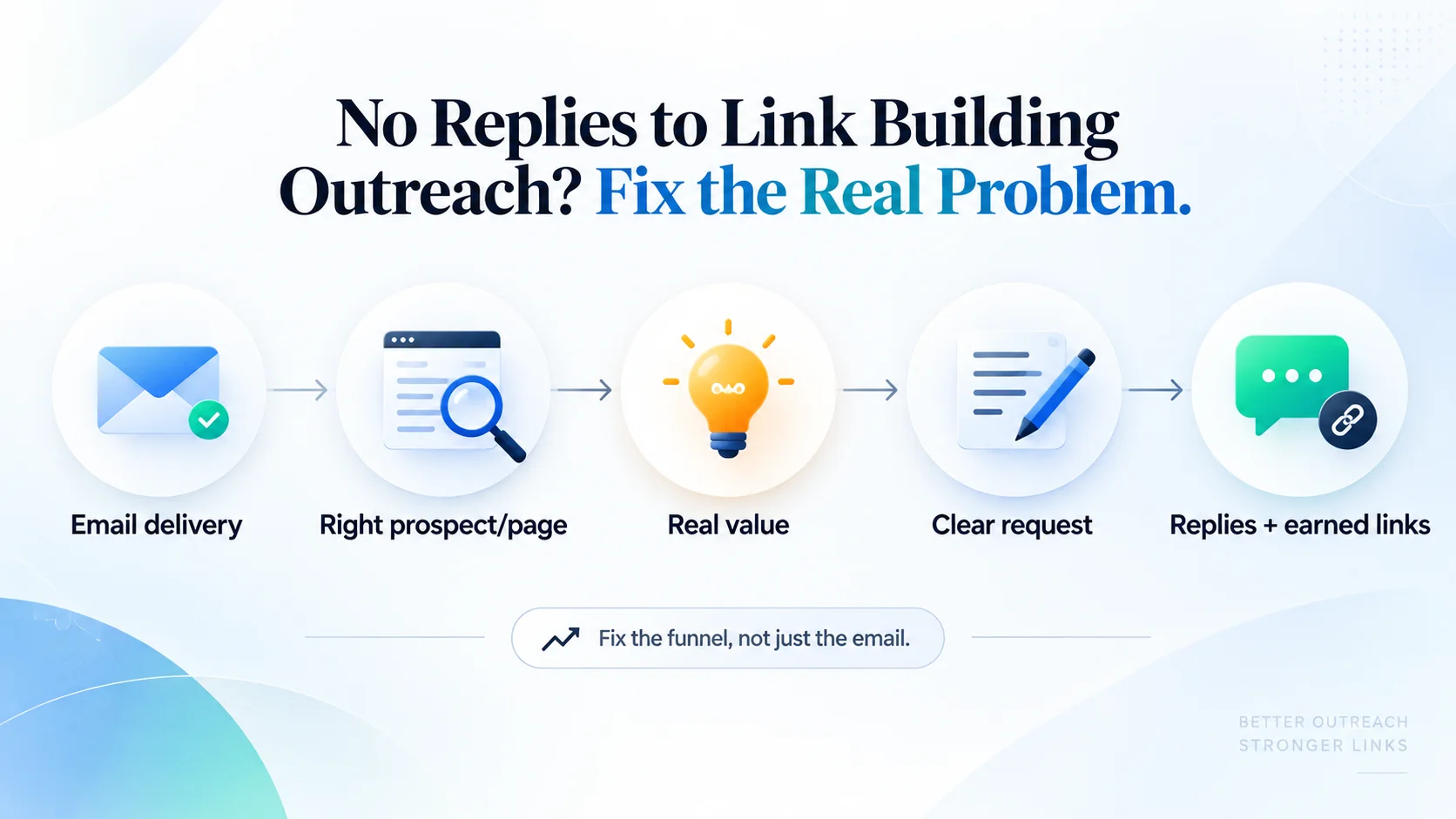
If your link building outreach gets no replies, stop increasing the send volume until you know which part failed. Silence can mean the email never reached an inbox, went to the wrong person, targeted a page with no reason to change, or asked for a link without offering anything useful in return.
Check those possibilities in that order. Rewriting the subject line first is tempting because it is easy. It is also useless when the address bounced, the recipient cannot edit the page, or your pitch gives them extra work for no reader benefit.
Locate the silence before you fix it
Do not treat every response as success or every non-response as a copy problem. Review the campaign by stage and use the strongest evidence you actually have.
| What you see | Most useful next check | What not to assume |
|---|---|---|
| Hard bounces or rejection messages | Address quality, sender authentication and the provider’s error code | That a more persuasive pitch will fix delivery |
| Delivered emails, almost no human replies | Exact-page fit, recipient role, sender reputation and the reason you gave them to act | That the subject line is the only problem |
| Replies send you to another person | Who owns or edits the page | That the website itself was a bad prospect |
| Most replies are prices or exchange requests | Your prospect source and the site’s normal publishing model | That a high reply count means a healthy campaign |
| Interested replies stall before placement | Your resource, requested change and response process | That prospecting or deliverability caused the final loss |
This order prevents one common mistake: changing five variables at once, getting a slightly different result, and learning absolutely nothing. Outreach already contains enough uncertainty. It does not need interpretive jazz.
First, prove the email could reach a real person
Start with delivery records, not opens. Separate delivered messages from hard bounces, temporary failures and provider rejections. Read the actual error codes. A full mailbox, a non-existent address and an authentication failure are different problems even when your campaign dashboard gives all three a red icon.
For mail sent to personal Gmail accounts, Google’s current email sender guidelines require all senders to use SPF or DKIM, valid DNS records and TLS, among other requirements. Senders reaching roughly 5,000 Gmail messages in a day face additional requirements, including both SPF and DKIM, DMARC and aligned authentication. These controls do not make a weak pitch attractive, but failing them can stop a good pitch from being seen.
- Confirm that the sending domain passes SPF, DKIM and DMARC checks supported by your email provider.
- Remove invalid addresses and investigate sudden increases in bounces or rejections.
- Check reputation, authentication and delivery errors in Google Postmaster Tools when your Gmail sending volume is high enough for its dashboards to populate.
- Respect opt-outs, provider rules and the commercial-email laws that apply to the sender and recipient.
Open rate is weak evidence. Tracking pixels can be blocked or preloaded, and Apple’s Mail Privacy Protection prevents senders from reliably seeing whether protected users opened a message. Use delivery, replies and campaign outcomes to make decisions. An impressive open percentage can still be a very pretty distraction.
Then check the page you chose, not only its domain
A relevant website can still contain a useless outreach target. The exact page may be outdated, abandoned, unrelated to your resource, controlled by another team or already complete without your link. Domain Rating and estimated traffic cannot answer whether an editor has a reason to touch that page today.
Open every priority URL and answer four questions:
- Does the page serve the same audience as your resource? Topic overlap is not enough. The resource must help the reader at that point in the page.
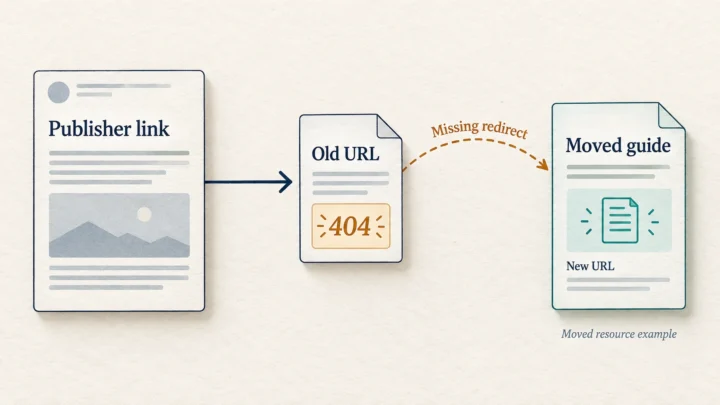
- Is there a specific reason to edit it? Look for a stale source, unsupported claim, missing example, broken destination or a question your evidence answers better.
- Is the site actively maintaining this type of content? A good-looking article with no editorial activity can be a museum exhibit, not an outreach opportunity.
- Can your contact approve the change? The author, editor or content owner is usually more useful than a generic inbox or executive who never touches the page.
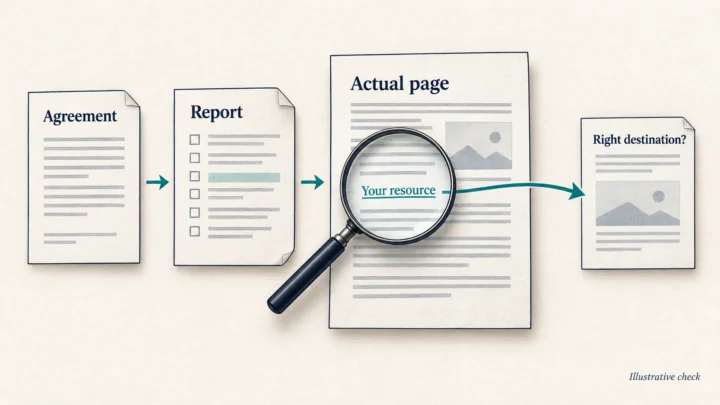
The site’s page-level prospect-vetting process separates mechanical checks from the editorial judgement you still need to make. That distinction matters here because automation can reduce a list, but it cannot invent a genuine reason for someone to cite you.
Your resource must earn the requested edit
Even the right editor will ignore a request that creates work without improving the page. “I enjoyed your great article, please add my link” is personalised only in the sense that someone pasted the correct title.
A defensible pitch usually carries something the page does not already provide: original data with a clear method, a better primary source, a working replacement for a dead resource, a useful tool, an expert contribution or an article that resolves a specific missing question. State that value plainly. Do not make the recipient excavate it from four paragraphs about your company.
Also check the purpose of the campaign. Google’s spam policies for web search list paid links that pass ranking credit, excessive link exchanges, automated link creation and low-value content made mainly to manipulate linking signals as link spam. If compensation or a commercial arrangement is involved, the publisher should qualify the link appropriately. The practical difference between sponsored, nofollow and ugc is covered in the site’s link-attribute guide.
Make one request that can be understood quickly
Once delivery, fit and value hold up, inspect the message. The recipient should be able to identify the page, understand why you contacted them and decide what to do without opening a puzzle box.
- Use an honest subject. Name the page, topic or issue. Do not fake a reply thread or disguise a commercial request.
- Show page-level relevance immediately. Refer to the exact section and the real reason it could be improved.
- Explain the resource in one concrete sentence. “Comprehensive guide” says nothing. Name the data, tool, correction or answer it contributes.
- Ask for one action. A clear request to review one resource is easier to answer than a guest post, partnership, call and link request bundled together.
- Make trust easy to verify. Use a real identity, role, domain and destination. Do not imitate familiarity you have not earned.
For example, the structure can be as simple as: you noticed a specific gap on a named page, you have a resource that resolves it, and you are asking whether the editor would consider it. That is a structure, not a universal template. The evidence and wording should change with every page.
Follow up with new value, then stop
A missed email is possible, so a restrained follow-up can be reasonable. Add something useful: a clearer explanation, the relevant data point, an updated resource or a simpler request. Repeating “just following up” several times does not strengthen the offer. It only confirms that the first email has learned to reproduce.
Stop after a small number of unanswered attempts, and stop immediately after a refusal or opt-out. If several carefully qualified prospects still ignore the same offer, the next test is not more reminders. Change the asset, the reason for contact or the prospect segment.
Test the pipeline in a small batch
Before scaling, send a batch small enough that you can inspect every page and message manually. Keep the asset and outreach reason consistent. Record:
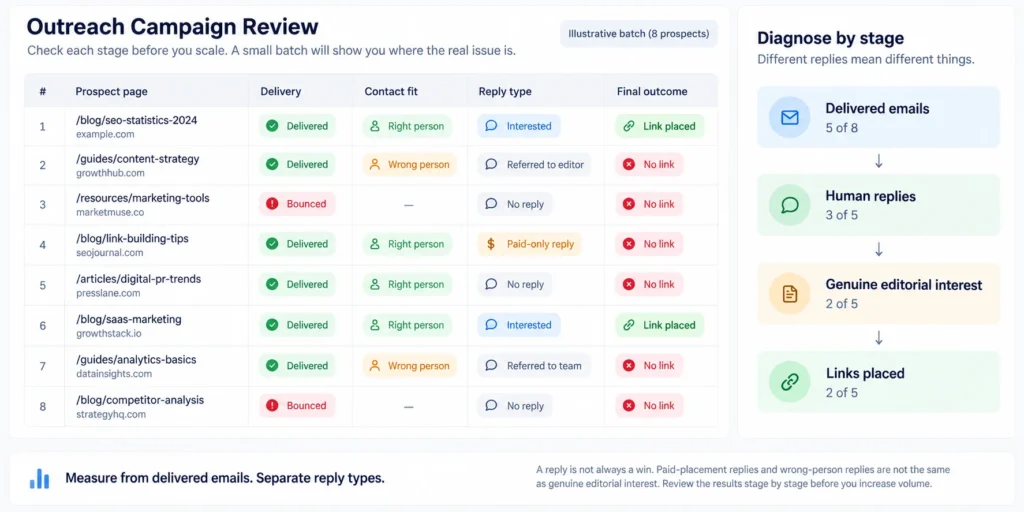
- valid addresses and delivered emails;
- wrong-person referrals and out-of-office responses;
- neutral, negative and genuinely interested replies;
- paid-placement or exchange requests;
- resources reviewed, edits agreed and links actually placed.
Calculate reply and placement rates from delivered emails, not the original spreadsheet total. More importantly, read the replies. Ten price lists and one editorial yes are not eleven versions of the same outcome.
Change one major variable for the next batch. If delivery failed, fix the sending setup. If the contacts were wrong, improve role selection. If the prospects were relevant but the offer drew no interest, improve the resource or the page-specific reason. If positive conversations stalled, repair what happens after the reply.
Sometimes the honest fix is not outreach
Pause the campaign when you cannot explain why the target page would be better after linking to your resource. Build the missing evidence, tool, case study or genuinely useful page first. You can also choose relationship-led outreach, digital PR, unlinked mention recovery or partnerships when a cold link request does not fit the asset or audience.
No replies are frustrating, but they are not a mysterious verdict on link building. They are a pipeline signal. Verify delivery, qualify the exact page, contact someone who can act, offer a reason that helps the reader, make one clear request and measure real outcomes. Only scale what survives that test.