
A backlink package is not complete just because a spreadsheet contains the promised number of rows. Each row should match an observable placement: the source page loads, the link is present, and its target, anchor and attributes match the agreement. If a page cannot be checked, mark it unverified rather than quietly passing or failing it.
This review does not prove that a link will improve rankings. For buyers of backlink packages, it answers the narrower question to settle before accepting a delivery: did the provider supply what was agreed?
A backlink package is an agreement, not a row count
Start with the order, proposal or approval sheet. Freeze the promised values before opening the delivery report. Otherwise, a provider can describe whatever appeared as the intended result.
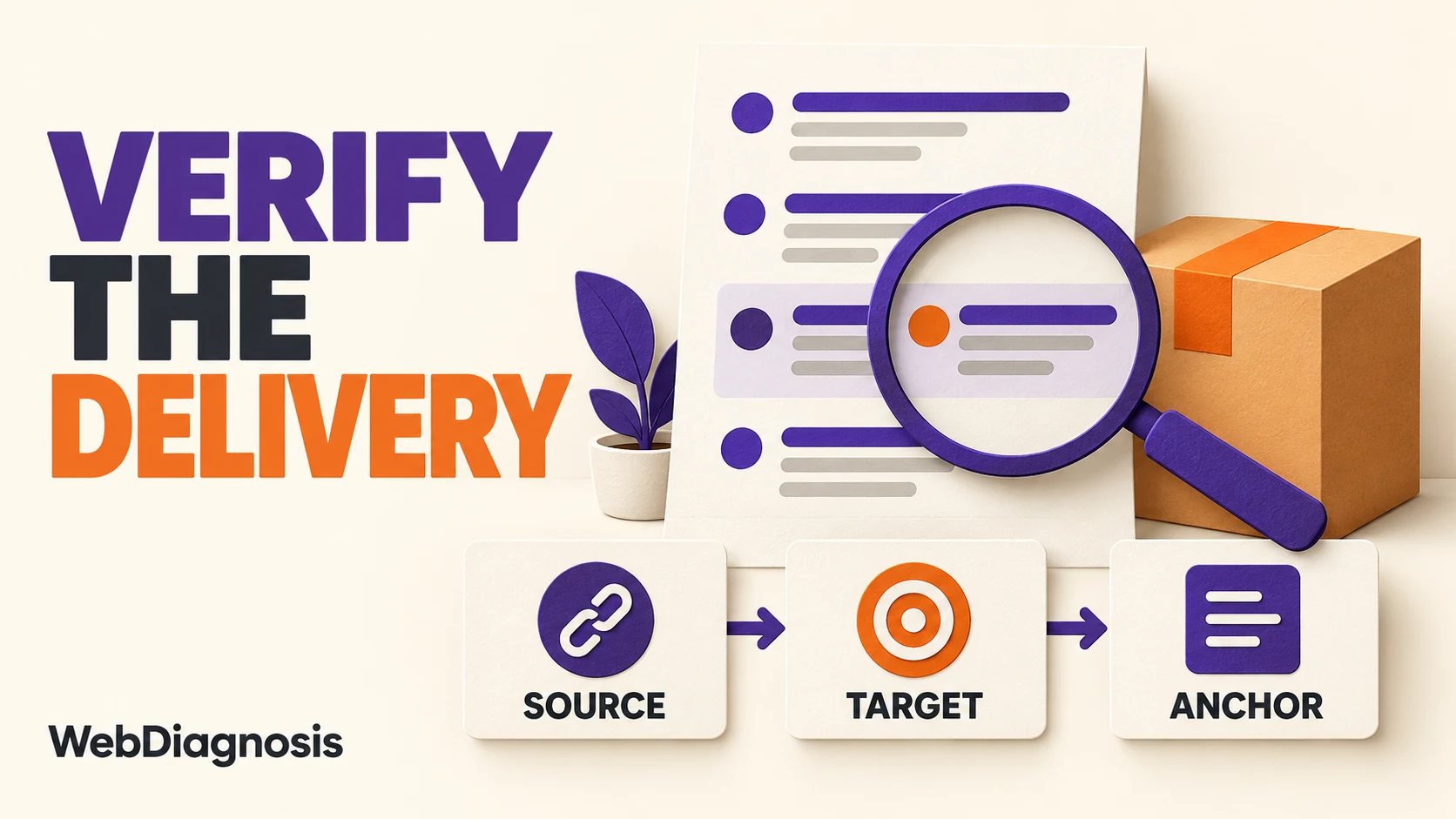
- Source page: Preserve the exact published URL, or an approved domain if the page was not known in advance. A homepage or domain name is not proof of a placement.
- Target page: Preserve the exact page on your site that should receive the link. A link to the wrong page is a delivery error even if the source looks strong.
- Anchor text: Preserve the agreed wording or an approved natural variation. This lets you distinguish an editorial change from an incorrect placement.
- Link attribute: Preserve the agreed
sponsored,nofollow,ugcor unqualified state. The attribute is part of what was delivered and can also affect policy risk. - Placement type: Record whether the promise was a guest post, niche edit, directory, mention or another defined format. Different formats need different evidence and replacement terms.
- Date and remedy: Keep the delivery date, guarantee window and correction or replacement rule. A mismatch is easier to resolve while the written remedy still applies.
If the original order only promised “high authority links,” the acceptance test is weak because the deliverable was vague. Record that limitation instead of inventing a stricter agreement after delivery. Before another order, use the vendor-list checks to define what you will and will not accept.
Check every delivered URL against six facts
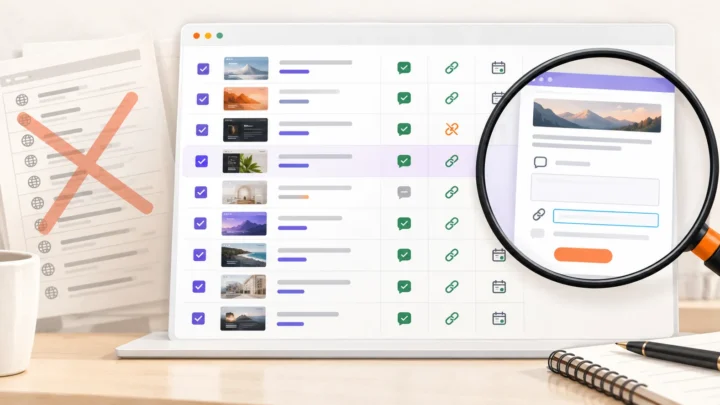
Open the exact source URLs, not screenshots. A link-building report review can tell you whether the report contains enough evidence, but the page itself is the current source of truth.
- Source response: Did the submitted URL return a readable page, redirect somewhere else, show an error or block the check? Save the final URL and the check date.
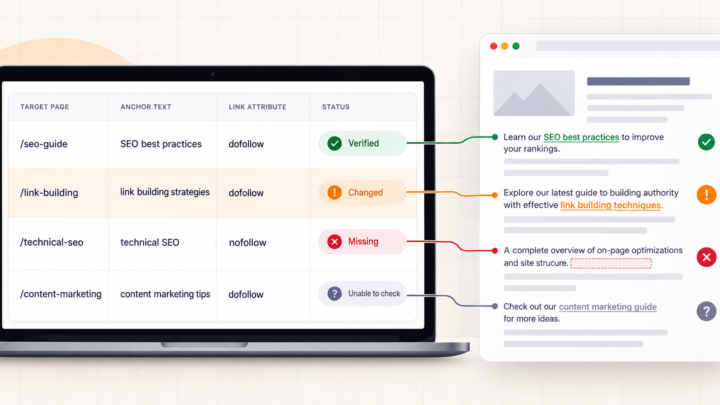
- Link presence: Is there a clickable link from that page to your site? A brand mention without a link is not the same deliverable.
- Actual target: Does the link point to the agreed destination? Compare the full URL, including the protocol, hostname, path and meaningful query parameters.
- Anchor text: Record the visible linked text exactly as published. Do not replace it with the wording from the report.
- Link attributes: Check the link element for
sponsored,nofolloworugc. Treat a missing attribute as an observation, not proof that Google will value the link. - Placement context: Confirm the link appears in the promised article or page type and is visible to a normal reader. A hidden, boilerplate or unrelated placement may technically contain the link while still failing the agreement.
For a small order, you can do this manually. For a larger report, the Backlink Verifier can check supplied source pages in bulk and return the observed target, anchor, attributes and page response. It verifies known placements. It does not discover every backlink to a domain or predict ranking value.
When a page times out, blocks access or fails to return readable content, use unverified. That state protects you from two bad shortcuts: accepting a placement you did not see, or accusing a provider of failure without enough evidence. Recheck it from a normal browser or ask the provider for a working public URL.
Use four acceptance decisions, not a vague quality score
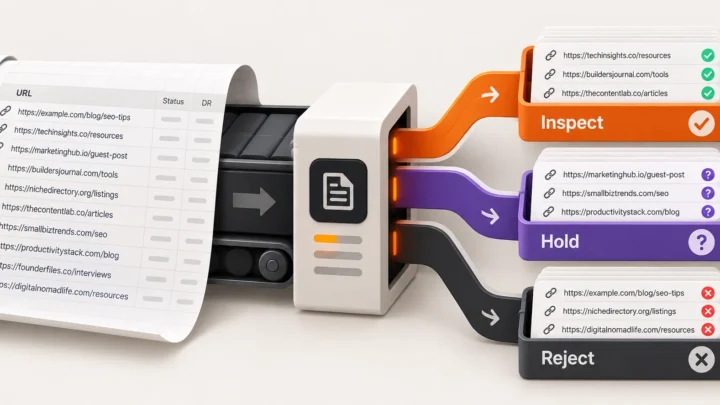
One label such as “good” or “bad” mixes delivery facts with SEO judgment. Give every row one operational decision instead.
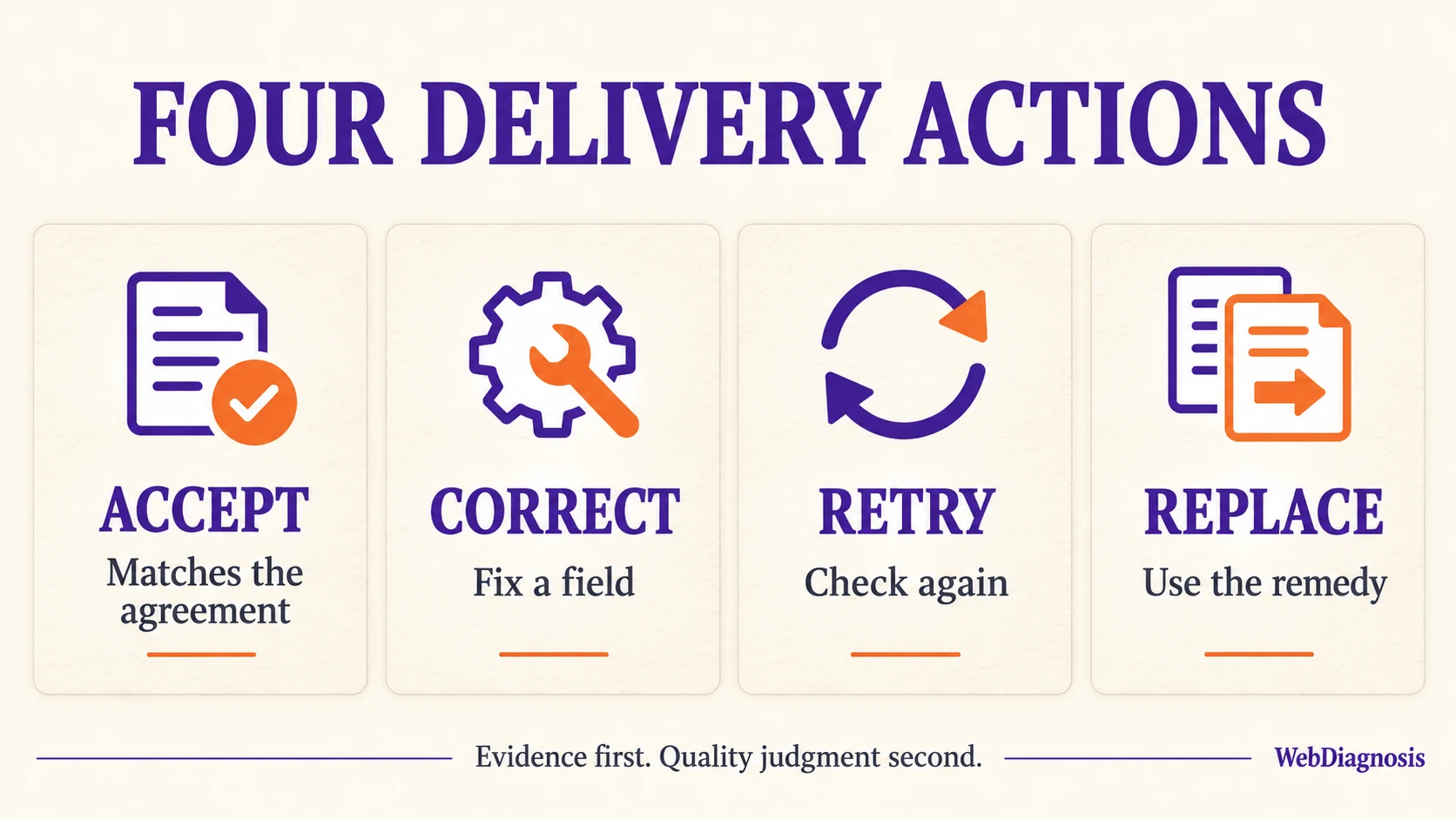
- Accept: The page is readable and the source, target, anchor, attribute and placement type match the agreement. Save the observed values and check date.
- Correct: The placement exists, but a fixable field such as the target or anchor is wrong. Send the exact mismatch and requested correction.
- Retry: The page cannot be verified because of a temporary error, block or incomplete publication. Set a recheck date and keep the row open.
- Replace: The placement is missing, on an unapproved source, in the wrong format or remains unreadable after a reasonable retry. Cite the replacement term and request a new placement.
This method produces an auditable acceptance record. It also stops uncertain rows from disappearing inside a percentage score.
Authority and traffic metrics cannot settle the delivery
Metrics can help you decide which placements deserve closer review, but they cannot replace the six checks. Ahrefs describes Domain Rating as a site-wide measure of backlink-profile strength, so it cannot tell you whether one exact page contains the correct link. Semrush also describes organic traffic in its reporting as an estimate based on observed keyword positions, not a measurement from the publisher’s analytics.
A DR threshold or traffic estimate may have been part of the commercial agreement. If so, record whether the provider’s chosen metric meets that promise. Then keep the claims separate:
- Delivery fact: the link exists and matches the agreed fields.
- Third-party estimate: the domain or page has a reported authority or traffic value.
- Human judgment: the page is relevant, credible and appropriate for your brand.
- Unknown: how a search engine will treat the link or whether rankings will change.
That distinction is the same reason Domain Rating alone is not enough. A high domain score does not repair a wrong target or a missing link.
Check policy before arguing about a followed link
Google’s spam policies list buying or selling links for ranking purposes as link spam. Google separately says paid placements should be marked with rel="sponsored"; nofollow remains acceptable, although sponsored is preferred for paid links. The site’s link-attribute guide explains what each value communicates.
That means a provider’s promise of followed links that pass ranking credit is not a premium quality guarantee. It is a policy risk. Your acceptance record should show the observed attribute, but it should not turn an unqualified paid link into the goal.
Send the seller evidence, not adjectives
“These links look low quality” invites an argument. A row-level mismatch gives the provider something specific to fix.
For example: three delivered rows need action. Two links point to the homepage instead of the approved product page. One source returned an error on the first check and again two days later. The attached rows include the source URL, expected value, observed value and check time. Please correct the two targets and replace the unreadable placement under the agreed replacement term.
Keep the original report, your verification output and the provider’s response together. If a link later changes, you will have both the expected state and the last observed state rather than a spreadsheet that merely says “live.”
For the next package, agree on the acceptance fields before payment and ask for exact source URLs in the final report. That turns package review from a debate about quality into a short list of facts, unresolved checks and actions.