

Link prospecting is the process of finding possible link opportunities, checking whether the exact pages fit your campaign and deciding which publishers are worth contacting. The useful result is a qualified outreach queue, not the largest spreadsheet you can export.
Keep three jobs separate: discovery finds candidates, qualification removes weak or uncertain pages, and outreach begins only after a person approves the opportunity and the reason for contacting it. When those jobs are mixed together, domain scores and contact details can make an unreviewed list look finished.
After this workflow, every surviving row should name an exact source page, a suitable destination on your site, the evidence behind the decision and a realistic request. That is enough to write a relevant email. A domain name and an address for editor@ are not.
Link prospecting has three separate jobs
| Stage | Question | Useful output | What does not belong yet |
|---|---|---|---|
| Discovery | Which sites or pages might contain a relevant opportunity? | A broad list with its source and intended tactic | Approval, priority scores and bulk email |
| Qualification | Does the exact page offer a credible route for this campaign? | Approved, manual-review and rejected rows with reasons | Guessed relevance or a verdict based only on domain metrics |
| Outreach | Why should this publisher consider this specific request? | A page-specific contact queue, message and owner | Rows nobody has opened or an offer that does not fit the page |
The boundary also helps with tools. A backlink database can discover candidate pages. A page checker can record observable facts. Contact software can find an address and manage follow-ups. None of those steps can decide, by itself, whether your proposed link would help the page’s readers.
Define the placement before collecting candidates
A prospect only makes sense in relation to a campaign. A guest contribution, resource-page suggestion, niche edit, expert quote and useful blog comment need different pages, evidence and contacts. Searching first and choosing the tactic later fills the sheet with sites that were never suitable for the same request.
Write down four things before discovery:
- The destination: the page, study, tool or resource you want a publisher to consider.
- The reader benefit: the question or next step your destination genuinely supports.
- The placement route: the kind of page and editorial action the campaign needs.
- The rejection rule: what makes a candidate irrelevant, inaccessible, misleading or outside your commercial and ethical boundaries.
This prevents the common habit of collecting impressive domains and inventing a pitch for them afterward. It also makes later decisions explainable to a teammate or client.
Discovery should produce possibilities, not approvals
Discovery can start from competitor referring pages, search operators, industry publications, communities, existing relationships or a vendor file. For competitor research, the site’s backlink gap analysis workflow shows how to preserve the exact referring page and find the editorial reason behind a link instead of copying a competitor’s domain list.
Save the source of every candidate. A page found through a competitor citation offers a different clue from a generic “write for us” result. The source does not approve the opportunity, but it tells the reviewer what to verify next.
At this stage, collect enough information to reopen the evidence: the exact URL, referring domain, discovery method, intended tactic and proposed destination. Contact enrichment can wait. Paying to find an email for a page you will later reject is a small expense that scales surprisingly well.
Qualification is where the list should get smaller
Open the exact page before judging the domain. Confirm that it loads, still serves the expected purpose and contains a realistic place for the proposed contribution. Then review topical fit, audience, editorial standards, existing outbound-link patterns and whether your destination actually improves the page.
Domain metrics can provide context, but they cannot observe a page-level opportunity. WebDiagnosis found this sharply in one purchased list checked by hand on 7 September 2026. The file contained 1,001 rows across 467 hosts, yet only 183 pages had an open comment form. Thirty-seven could carry a followed comment link, and ten were followed, readable and low visible-spam-risk under the study rules. None of the 285 rows at Ahrefs DR 50 or above appeared among those 37.
Those rates describe one purchased commenting list, not link prospecting across the web. The useful lesson is narrower: sorting the domain column could not answer what existed on the exact page. The full 1,001-row study keeps the denominators, method and limits attached.
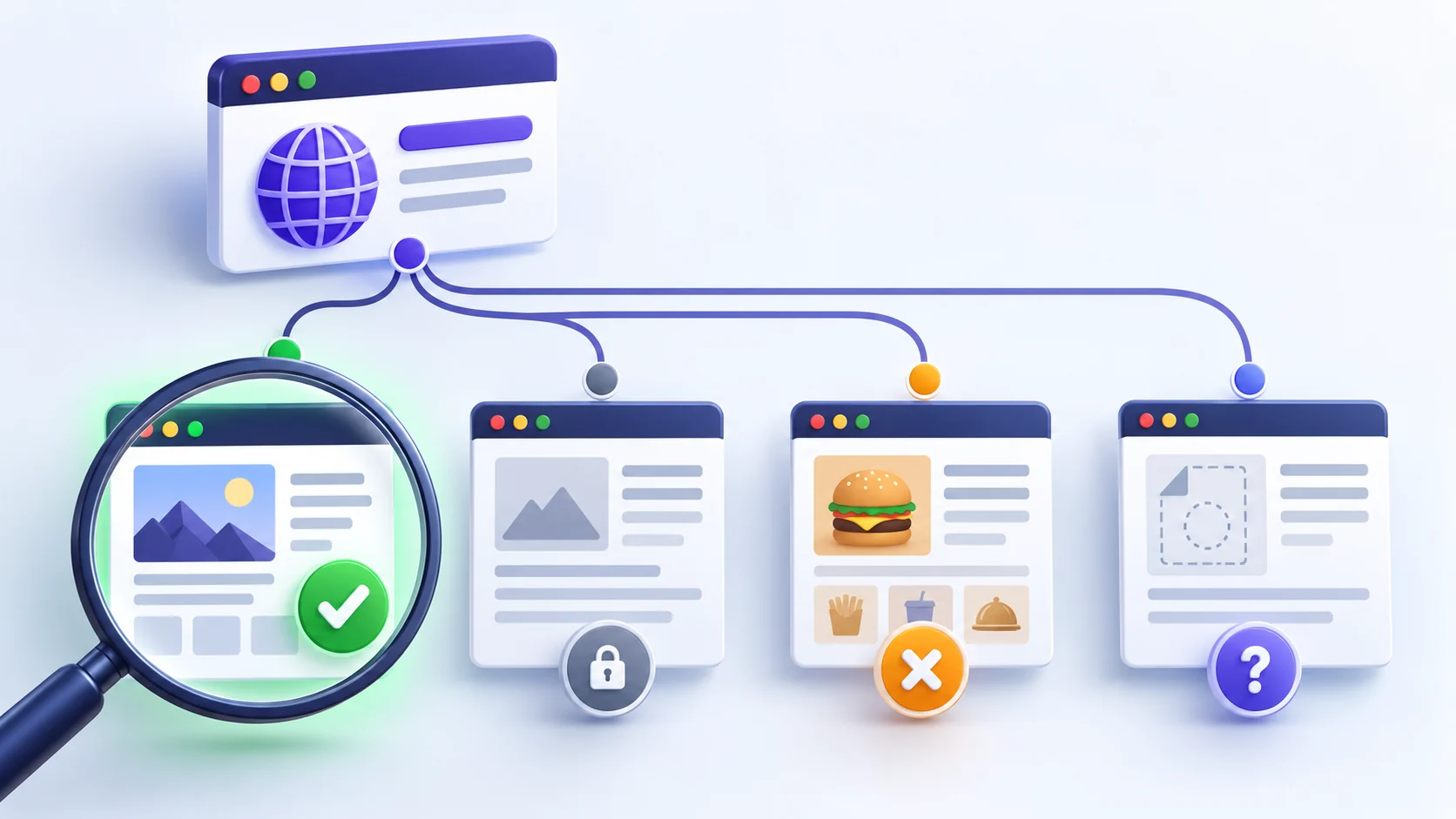
Use the same evidence order for other tactics. A resource page must still be maintained. A contributor page must describe a current editorial route. A proposed niche edit must fit the surrounding argument. If a page is blocked or cannot be read, record it as unknown rather than quietly changing uncertainty into rejection or approval.
Keep observable checks and human decisions apart
Software is useful when the answer can be read consistently from a page or file. A person is still responsible when the answer depends on meaning, editorial judgment or the honesty of the proposed request.
| Software can help record | A person still needs to decide |
|---|---|
| Duplicate URLs and repeated hosts | Whether repeated pages represent useful separate opportunities |
| Page response, redirects and access failures | What an inaccessible result means and whether to recheck it |
| Visible forms, links, attributes and placement patterns | Whether the proposed contribution belongs in the page |
| Third-party domain and traffic estimates | Whether the audience, publication and editorial standards fit the campaign |
| Review dates, owners and workflow status | Whether the request gives the publisher a defensible reason to act |
The detailed prospect-vetting guide provides page-level rejection criteria when a row needs closer review.
Build the outreach queue only after qualification
A qualified row should make the future message easier to write. Record the exact page, the section or reader need you can support, the destination you propose, the observed evidence, the decision and its date. Then find the person responsible for that page or contribution route.
Use three decision states instead of hiding uncertainty inside one score:
- Contact: the page is current, relevant and has a credible editorial route for a useful request.
- Manual review: the page may fit, but relevance, ownership, access or placement evidence is incomplete.
- Reject or park: the row is irrelevant, automated, misleading, outside the campaign or lacks a defensible reason for contact.
Record rejection reasons. Otherwise, the same weak domains return in the next export wearing fresh row numbers.
Do not turn prospecting into automated link creation
Prospecting helps you research and choose where a legitimate contribution may belong. It does not make mass placement or generic outreach safer. Google’s spam policies include links created primarily to manipulate rankings, automated link creation and paid links that pass ranking credit among link-spam examples. Paid placements should use the appropriate qualifying attributes.
The practical test is whether the request still makes sense when the ranking promise is removed. A useful citation, correction, expert contribution or resource can serve the publisher’s readers. “Please add my link because your domain score is high” serves the spreadsheet.
A smaller, explainable queue is the useful result
Good link prospecting removes work before outreach begins. Discovery gives you places to investigate. Qualification converts those possibilities into decisions. Outreach carries forward only the pages with a clear fit, an honest request and enough evidence for someone to approve the contact.
If you already have a list of public comment-prospect URLs, the Backlink Prospect Checker can record page access, comment-form status, observed comment-link attributes, Ahrefs DR and visible comment-spam risk. It does not discover prospects, decide relevance, find contacts, send outreach or guarantee a placement. The decision stays with you, which is exactly where the prospecting workflow needs it.