

A niche edit adds a link to an article that is already published. It is also called a link insertion or contextual link insertion. The page may have history and existing readers, but that does not make every added link useful, editorial or worth paying for.
Before you agree to a placement, ask for the exact source URL and the proposed change. Read the surrounding paragraph, open the destination and identify the commercial terms. A domain score cannot tell you whether one new sentence belongs in one particular article.
This guide helps you review the placement you can actually see. It cannot predict ranking gains or turn a paid ranking link into a compliant one.
What is a niche edit?
A niche edit is a change to an existing page that adds a link to another website. The editor may add the link to an existing sentence, revise a paragraph or insert a new sentence. The term describes the format of the edit, not its quality or purpose.
Some insertions are ordinary editorial updates. An author might add a newly published dataset, replace a dead citation or point readers to a useful calculator. Other placements are sold as SEO products. Payment, editorial control and the reason for the link matter more than the label used in an outreach email.
| Format | What changes | Main review question |
|---|---|---|
| Niche edit | A link or short passage is added to an existing article | Does this exact edit improve the page for its current readers? |
| Guest post | A new article is written and published | Would the complete article deserve publication without the backlink? |
| Citation update | An old, broken or weaker source is replaced | Does the new destination support the same claim more accurately? |
Ask for the exact page and proposed edit before discussing price
“A relevant DR 70 site” is not a placement. It is a sales description. Ask the seller or publisher to provide enough information for a page-level decision:
- the exact source URL;
- the paragraph before any change;
- the proposed sentence and anchor text;
- the final destination URL;
- the link attribute that will be used;
- whether payment, a product, a service or another benefit is involved.
If the provider will reveal the domain only after payment, you cannot assess the article, ownership, audience or other outbound links. That turns due diligence into an expensive unboxing video, minus the fun part.
Review five parts as one connected placement
A niche edit works as a chain of reader expectations. The source page sets the topic. The paragraph creates a reason to click. The anchor describes what comes next. The link attribute communicates the relationship. The destination must then fulfil the promise.
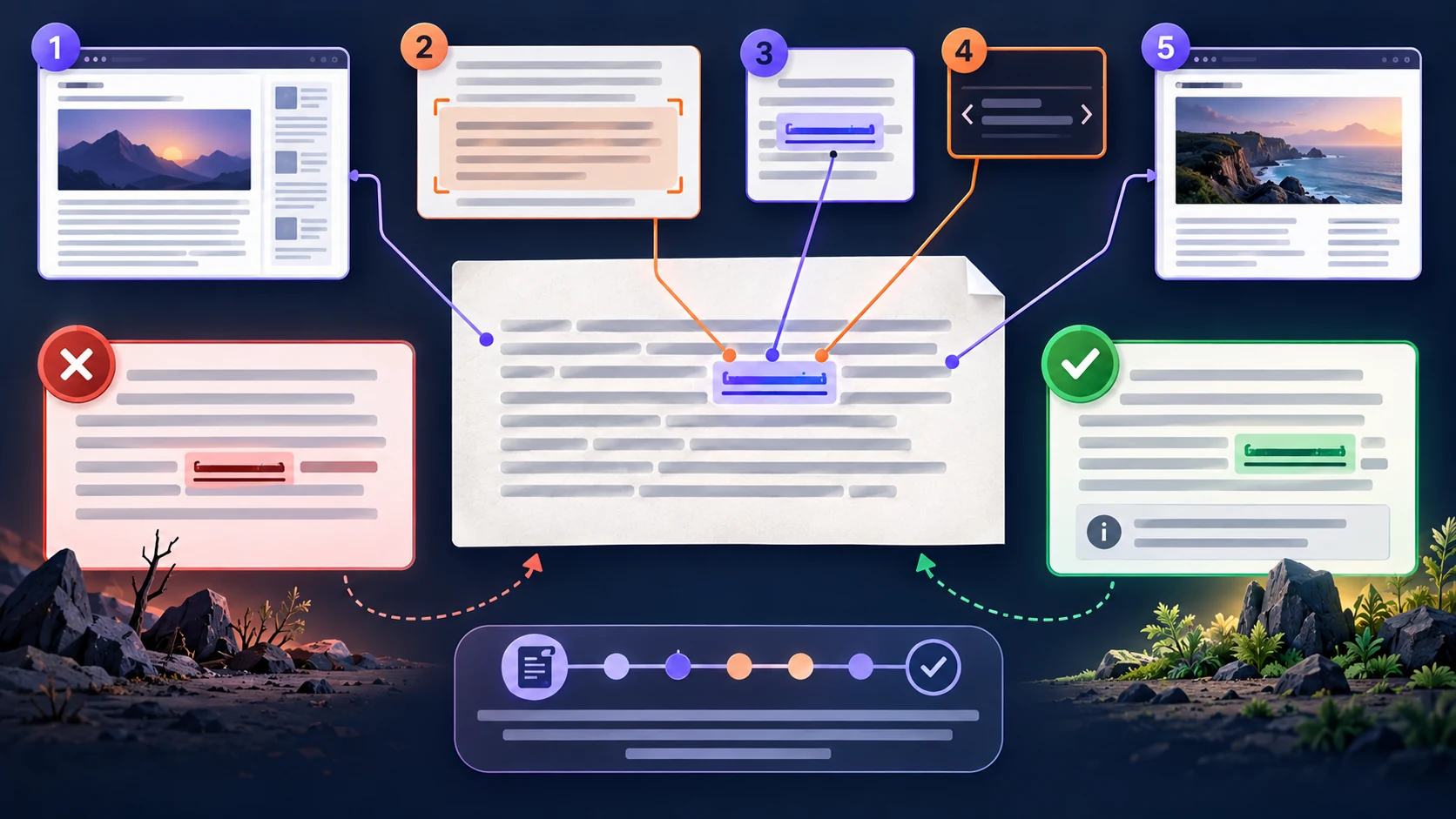
- Source page: Read the full article. Check whether it still serves a real audience, who is responsible for it and whether the topic genuinely overlaps with your destination.
- Surrounding paragraph: Identify the information gap. A citation should support a claim, explain a term or help the reader complete the next step.
- Anchor text: Use wording that describes the destination naturally. Google’s link best practices recommend concise, descriptive anchors with relevant context.
- Link attribute: Record whether the link uses
sponsored,nofollow,ugcor no qualifying attribute. The link-attribute guide explains what each value communicates. - Destination: Open the final URL, follow any redirects and confirm that the page answers the expectation created by the sentence and anchor.
Do not let a strong metric average hide a weak edit. The reader experiences this paragraph and this destination, not the seller’s spreadsheet summary.
A useful edit fills a real information gap
Start with the page as it exists today. What would a reader reasonably need at the proposed insertion point? Perhaps the article states a fact without a source, names a process without showing the steps or recommends a check without giving readers a tool to perform it.
Now remove your preferred anchor and brand from the proposal. Write the most useful sentence for that gap. If your destination is still the natural reference, the placement has a coherent editorial reason. If the sentence has to bend around a commercial phrase, the anchor is driving the edit.
Also read what comes immediately before and after the insertion. A sentence can be topically related yet still interrupt the argument, repeat advice or send the reader backwards. Context is more than sharing a few keywords.
Paid link insertions need clear treatment
Google’s spam policies list buying or selling links for ranking purposes as link spam. The examples also cover paid articles with links that pass ranking credit and optimized anchors in guest posts or distributed content.
Payment for advertising or sponsorship is normal on the web. Google says those links should be qualified. Its outbound-link guidance prefers rel="sponsored" for paid placements, while nofollow remains acceptable where appropriate.
No domain score, estimated traffic figure or “editorial” label overrides those terms. A useful destination can still be part of a paid ranking arrangement. Likewise, adding sponsored does not repair an irrelevant or misleading sentence. Policy treatment and reader usefulness are separate checks, and you need both.
Put the delivery and replacement terms in writing
A placement can match the preview and still become a poor purchase if the terms are vague. Record the agreement before payment so delivery can be checked against something more reliable than memory.
| Term | What to record | Why it matters |
|---|---|---|
| Placement | Exact source URL, paragraph, anchor, target and link attribute | Prevents a different page or weaker edit from being treated as equivalent |
| Editorial control | Who can change the sentence, destination or attribute | Shows whether revisions require approval and who is responsible |
| Duration | Any stated retention period and its starting date | Turns “permanent” into a term that can be reviewed |
| Replacement | What happens if the link, page or site disappears | Separates page deletion, link removal and target failure |
| Remedy | Replacement, repair or refund conditions and deadlines | Clarifies the response before a dispute begins |
The link-building report checklist shows how to preserve source and target evidence, ownership, cost, attributes and verification dates across a campaign.
Verify the delivered edit, not the invoice
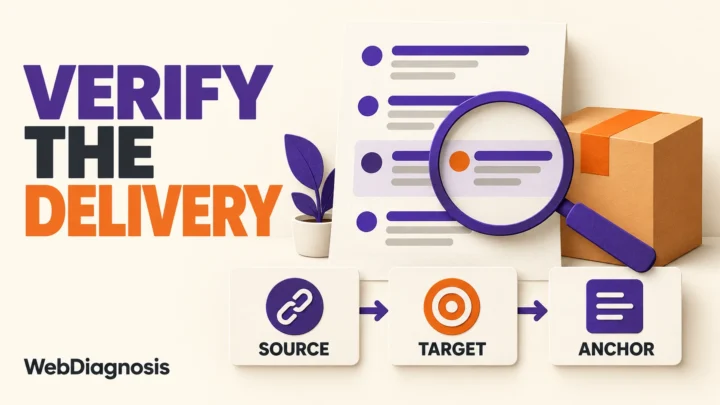
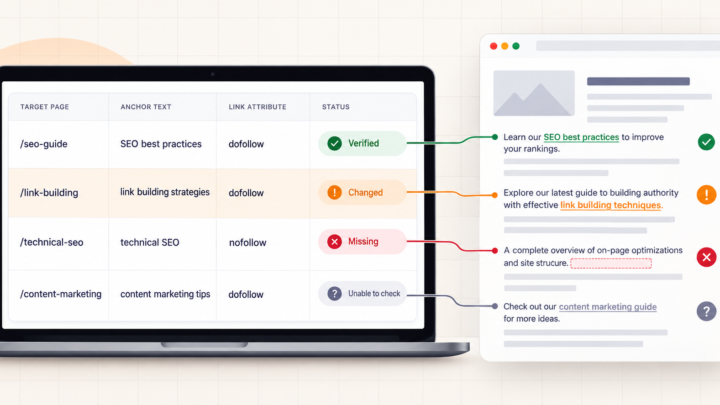
When the provider marks the order complete, open the live source page yourself. A screenshot can show the right paragraph while hiding a redirect, changed attribute or inaccessible page.
- Confirm that the exact source URL returns a usable page.
- Find the agreed sentence and compare it with the approved wording.
- Inspect the anchor, target and link attributes.
- Open the target and record redirects or errors.
- Save the check date and evidence with the original agreement.
Monitor placements that matter
A correct link on delivery day can change later. The publisher may update the article, move the page, alter the attribute, redirect the destination or remove the link. The source page can also disappear while the rest of the website stays online.
Check contractual or important placements on a schedule that matches their value and terms. Backlink monitoring tools can flag observable changes, but a person still needs to compare the change with the agreement and page context.
If a placement vanishes, confirm the source response, search the page and test the target before contacting the publisher. The guide to lost backlinks separates link removal, page loss, redirects and crawler limitations so you can ask for the right remedy.
Know when to ask for changes or walk away
Ask for a revision when the article is genuinely relevant but the sentence is forced, the anchor overpromises, the destination is too broad or the commercial relationship needs a different attribute. A willing editor should be able to explain why the change helps the page.
Decline when you cannot see the source before payment, a followed link is guaranteed regardless of context, the page is unrelated, the seller will not disclose who controls it, or the only stated benefit is a ranking metric. Also decline when the proposed edit misrepresents your destination. A backlink is not useful if the click begins with disappointment.
Proceed only when the exact edit serves the article’s readers, the commercial relationship is treated honestly, the destination fulfils the promise and the delivery terms are clear enough to verify later.
The page should justify the link
Niche edits are a publishing format, not a quality badge. Review the source page, paragraph, anchor, attribute, destination and agreement as one placement. If those parts make sense only after you look at a domain score, the score is doing more work than the edit.
The practical rule is simple: approve the reader experience first, treat payment transparently and verify what was actually delivered. That creates a defensible decision even when the answer is “no.”