

Reciprocal links are not automatically harmful. Two websites can recommend each other because both references genuinely help their readers. The concern begins when the return link is the reason either link exists, especially when the arrangement is repeated, irrelevant or designed mainly to influence rankings.
If someone offers “add my link and I will add yours,” do not judge the deal from domain scores or the word collaboration. Ask for the exact pages, destinations, anchors and conditions. Then use a simple test: would each link still deserve to exist if the other one disappeared?
That question will not predict how Google values a link. It will reveal whether the offer has an editorial reason independent of the trade, which is the part you can actually evaluate.
A reciprocal link and a link exchange are not always the same thing
A reciprocal link is an observable pattern: website A links to website B, and website B also links to website A. The links might have been created years apart by different editors with no agreement between them.
A link exchange is an arrangement. One party provides a link in return for another link, whether the swap is direct or routed through additional websites. The pages can look natural while the underlying reason remains a trade.
- Natural reciprocity: A tax adviser cites a useful government-filing guide, and the guide later lists the adviser’s original research. Neither mention was conditional on the other.
- Direct exchange: One editor adds a requested link only after receiving confirmation that a return link will be placed.
- Three-way or ABC exchange: You link to website B, while website C links back to you. A coordinator arranges the return through a different domain.
- Commercial partnership: Two businesses promote each other as part of a paid, affiliate, sponsorship or contractual relationship that may require link qualification.
The visible arrows do not explain the relationship. You need the agreement and the page context to understand why the links exist.
Use the independence test before considering the offer
Mentally remove the link you expect to receive. Now look at the outbound link you were asked to add. Does it still help a reader complete the task on that page? Is the destination something you would have cited without an SEO promise?
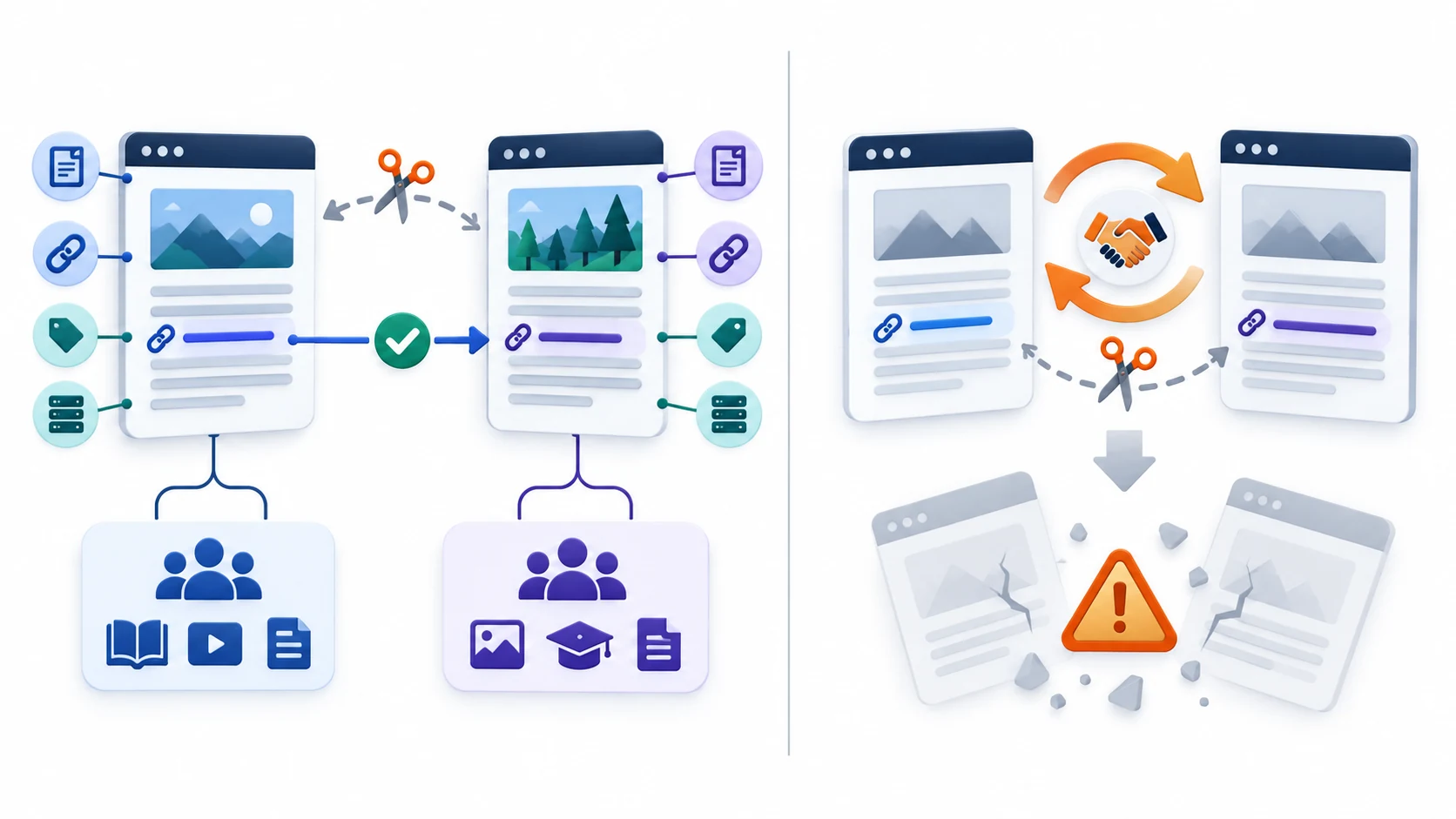
Run the test in both directions:
- Your page: Would you add their destination if they could not link back?
- Their page: Does their proposed source genuinely need your destination, or is the sentence being created to complete the deal?
Two honest yes answers do not create a guarantee or a safe harbor. They establish that each link can be defended as an editorial choice. A no answer tells you the exchange itself is supplying the purpose.
Inspect the exact pages, not a domain score
A strong domain can contain an irrelevant, neglected or commercially controlled page. A modest site can publish the most useful resource for a narrow audience. Review the proposed placement at page level before discussing DR, traffic estimates or the number of links you might trade.
- Get both exact source URLs. “We will link from our blog” is not enough. Ask which existing or planned page will contain the link.
- Check both destination pages. Each destination should fulfil the promise made by the surrounding sentence and serve the source page’s audience.
- Read the surrounding section. A link placed inside a useful explanation has a different reader job from one inserted into an unrelated paragraph.
- Keep anchor wording descriptive. Be cautious when the other party requires a commercial search phrase that sounds unnatural in your copy. Google’s link best practices recommend concise, descriptive anchor text supported by context.
- Identify payment and other consideration. Money, services, products, access and contractual benefits can change how the link should be treated.
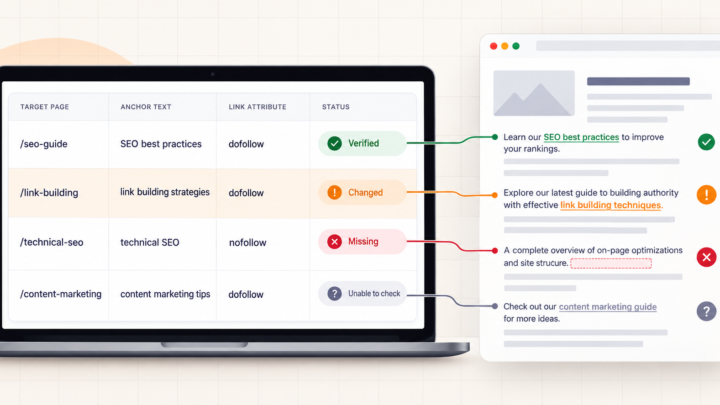
- Check link attributes. Record
sponsored,nofolloworugcinstead of assuming every visible link passes ranking credit. The link-attribute guide explains the distinctions. - Confirm ownership and editorial control. For an ABC offer, ask who owns website C, who can edit it and whether it participates in a larger placement pool.
Save the proposed source URL, target URL, anchor, placement, attribute, owner and approval date before anything goes live. If an agency or freelancer is arranging the deal, the link-building report checklist shows what evidence should survive beyond a screenshot.
A three-way exchange does not remove the agreement
An ABC exchange separates the visible return path. You link from A to B, and a third site C links to A. The absence of a direct A-to-B-to-A loop can make the arrangement less obvious in a simple backlink export. It does not give each placement an independent editorial purpose.
The extra domain also creates questions you may be unable to answer. The coordinator might own several sites, reuse the same participants across many deals or replace the promised source with another page later. You can inspect the three URLs you receive; you cannot infer the size or behavior of the wider network from those URLs alone.
Do not treat “three-way” as a safety feature. Apply the same independence test to every edge and decline when a coordinator will not identify the exact sites, pages and ownership involved.
What Google actually says about link exchanges
Google’s spam policies define link spam as creating links to or from a site primarily to manipulate search rankings. The examples include excessive “link to me and I’ll link to you” exchanges and partner pages created exclusively for cross-linking.
The word excessive does not provide a numerical allowance. Google publishes no safe exchange count, reciprocal-link percentage or ABC formula. That is why advice such as “keep swaps below 10%” cannot be treated as a policy threshold.
Commercial relationships need separate care. Google’s outbound-link guidance says paid links should be marked with rel="sponsored", with nofollow still acceptable when other values do not apply. The correct attribute does not make an irrelevant page useful, but it communicates the relationship more honestly.
Accept, ask for changes or decline?
Use the evidence you collected to choose a response. This table is a decision aid, not a Google risk score.
| Response | When it fits | What to preserve |
|---|---|---|
| Accept as an editorial collaboration | Both exact placements help their own readers, each editor retains control, no forced commercial anchor is required and the links remain useful independently | Source and target URLs, editorial reason, agreed wording and review date |
| Ask for changes | The pages are relevant but the proposed anchor is forced, the destination is weak, ownership is unclear or a commercial relationship needs appropriate qualification | The revised pages, attributes, ownership answers and final approval |
| Decline | The only stated benefit is rankings, the source is irrelevant, a follow link is mandatory, the partner hides the return site or the offer comes from a large exchange pool you cannot evaluate | The offer and reason for declining so another teammate does not accept it later |
If software is being used to scale offers, automate research and record keeping while preserving editorial approval. The guide to automated link-building tools explains where useful workflow automation crosses into automated link creation.
Record and monitor any arrangement you keep
A reciprocal arrangement creates two maintenance obligations. Either page can move, disappear, change its destination or lose the agreed context. Keep one record with:
- both exact source and target URLs;
- the live anchor and link attributes in each direction;
- the business or editorial reason for each placement;
- every site owner, editor and intermediary involved;
- any payment, product, service or contractual consideration;
- approval, publication and last-verification dates.
Check important or contractual placements on a schedule proportionate to their value. A backlink monitoring tool can alert you to observable changes, but a person still needs to interpret whether a changed page breaks the agreement or simply reflects normal editing.
What if you already have many reciprocal links?
Do not remove or disavow links simply because a tool labels them reciprocal. Start by separating unplanned mutual citations from exchanges your team, an agency or a previous owner arranged.
- Export the reciprocal domains and group multiple rows from the same site.
- Prioritize controlled deals, repeated anchors, partner pages and placements with commercial terms.
- Open both directions and apply the same page-level and independence checks used for a new offer.
- Correct misleading destinations, forced anchors or unqualified paid relationships you control.
- Keep useful independent citations and record why they serve readers.
Google describes disavowal as an advanced action for particular circumstances, not routine housekeeping. Before uploading anything, follow the evidence hierarchy in the guide to checking suspected toxic backlinks.
The practical answer
Accepting a link exchange should never depend on a supposedly safe percentage or the cleverness of an ABC route. Ask for every exact page and condition. Check the destination, context, anchor, attributes, ownership and commercial relationship.
Then remove the promised return link from the thought experiment. If each citation still helps its own readers, you have an editorial reason you can document. If the deal falls apart, that is useful clarity too. Declining one awkward swap is usually cheaper than spending months explaining a pattern nobody recorded properly.